Quick Lessons
How robots work, one minute at a time
Watch a one-minute video, play with a live demo, answer one question. 74 lessons in five short courses — free, no account, nothing to install.
- 74 lessons
- 1 minute each
- A demo in every lesson
- Free · no sign-up
Start here
Ultrasonic Sensor
A robot sends out a burst of sound you cannot hear, waits for the echo, and turns the waiting time into distance.
Start the first lesson →One minute. No account needed.
Five short courses
Take them in any order. Each one stands on its own.
How Robots Sense
Sound, sight, hearing and balance — the six ways a robot takes in the world.
10 lessons · about 10 min
Motors and Mechanics
Gears, servos, arms and the mechanics behind repeating a movement exactly.
16 lessons · about 16 min
Control and Balance
Feedback, staying upright, following a line, and finding a way through.
20 lessons · about 20 min
Hands and Touch
Gentle grips, prosthetics and the surgical robots that work inside people.
11 lessons · about 11 min
Robots at Work
Vacuums, warehouses, Mars rovers, and the stairs problem nobody has solved.
17 lessons · about 17 min
Plain English. Free. Unsubscribe in one click.
Every lesson
All 74, grouped by course.
👁️ How Robots Sense
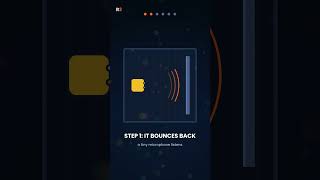
Ultrasonic Sensor
A robot sends out a burst of sound you cannot hear, waits for the echo, and turns the waiting time into distance.

Computer Vision
A camera gives a robot a grid of numbers. Software finds edges, shapes and finally objects in those numbers.

How a Smart Speaker Hears Its Wake Word
A tiny always-on model listens for one sound pattern. Only after it matches does the bigger system wake up.

Gyroscope and IMU
An IMU combines a gyroscope and an accelerometer so a robot can tell how it is tilted and how fast it is turning.

How Self-Checkout Cameras Recognise Fruit
A camera compares the colour, shape and texture of what is on the scale with thousands of labelled examples and picks the best match.

How LiDAR Works
LiDAR sends out pulses of laser light and times the echoes, building a map of distances in all directions.

SLAM
SLAM builds a map and works out the robot’s place in it at the same time, using what the sensors see as it moves.

Sensor Fusion
Every sensor has a weakness. Combining cameras, radar, LiDAR and motion sensors gives a picture better than any one alone.
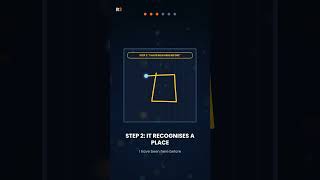
SLAM Loop Closure
Small errors add up until a robot thinks it is somewhere it is not. Recognising one familiar place lets it correct the whole map.

Weeding Robots
A camera, a trained model and a tiny sprayer or blade work out weed from crop in a fraction of a second.
⚙️ Motors and Mechanics

Gears Explained
Gears trade speed for turning force. A small fast motor plus a gear reduction becomes a slow, strong joint.

Servo Motor Explained
A servo is a motor with a position sensor and a control loop. You ask for an angle and it keeps correcting until it gets there.

How a Robot Arm Picks Up a Cup (6 Motors, Explained Simply)
Six joints let a gripper reach any point and turn to any angle. Software works out how much each joint must move.

Why Are Robots So Good at Repeating?
A robot stores a position as numbers and checks sensors every cycle, so it returns to the same spot again and again without getting tired.

Harmonic Drive
A harmonic drive is a compact gear set with a big speed reduction and almost no backlash, which is ideal for precise robot joints.

Micro Robots
At tiny sizes gears and motors stop working well, so micro robots move with vibration, magnetic fields or bending materials.

Stewart Platform
A top plate on six adjustable legs can tilt, shift and rotate in every direction. Flight simulators and precision stages use it.

Snake Robots
Many small joints in a row bend in a wave, so the robot can crawl, climb and squeeze through gaps wheels cannot.

Inverse Kinematics
You know where the hand should be. Inverse kinematics works out what angle each joint needs to get it there.

Degrees of Freedom
Degrees of freedom count the ways a robot can move. Six let a gripper reach any point in space and face any direction.

Torque vs Speed
A motor has a fixed power budget. Gears can trade speed for turning force, so strong joints are slow and fast joints are weak.
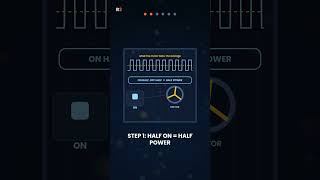
PWM Explained
A robot does not turn the power down like a dimmer. It switches it fully on and off, very fast, and the on-time sets the speed.

Stepper Motor Explained
A stepper motor moves in exact steps, so a machine can count its way to a position. It just cannot tell if it missed one.

Why Robot Motors Get Hot Even When Holding Still
Holding still still needs current, and current becomes heat. Brakes let a joint hold without burning power.

Delta Robot Explained
The motors sit on top, so the moving parts are very light. That is the secret behind the fastest pick robots in factories.

SCARA Robot Arm
A SCARA arm is stiff up and down but flexible side to side, which is exactly what packing and assembly need.
🎛️ Control and Balance
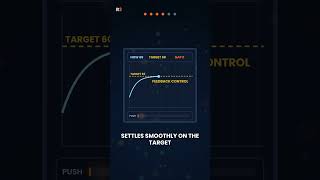
Feedback Control Explained
Measure, compare with the goal, correct, repeat. Cruise control and robots use the same loop.

Line Follower Robot
Two light sensors see dark line or bright floor. If the line drifts to one side, the robot steers toward it.

Why You Don't Fall in a Moving Bus (And Robots Do)
Your inner ear and muscles correct your balance constantly without you noticing. A robot must be built to do the same.

How Boston Dynamics Robots Keep Their Balance
Legged robots sense their body tilt and joint positions many times per second and keep shifting weight and placing feet to stay up.

How Drones Stay Level in Strong Wind
A drone measures its tilt hundreds of times a second and changes each propeller speed to push back against the wind.

PID Controller in 60 Seconds
A PID controller corrects an error using three ideas: how big it is now, how long it has lasted, and how fast it is changing.

ROS 2
ROS 2 is not a real operating system. It is a toolkit that lets many robot programs talk to each other by sending messages.

How Robots Learn to Walk
The robot tries moves, gets a score for good results and learns by trial and error, mostly in simulation first.

A* Pathfinding
A* explores the map by always trying the most promising square first, using the cost so far plus a guess of the cost left.

State Machine
A robot is always in exactly one mode, and a few simple rules decide when it switches to another. That is a state machine.

Robot Latency
Add a blink of delay to the loop and a balancing robot goes from steady to wobbling. Latency is how late the robot acts on what it sensed.

Reward Hacking
A learning robot found a way to score more by never finishing. Reward hacking is when the score and the real goal come apart.

Sim to Real
A robot can fall a million times inside a computer without breaking anything. The hard part is making what it learned work on a real floor.

How Humanoid Robots Walk Without Falling (ZMP Explained)
A walking robot is always almost falling. The zero moment point is the idea that tells it where it can safely put its weight.

Gain and Damping
Correct too hard and the arm shakes. Correct too gently and it is slow. Gain sets the push, damping calms the overshoot.

How Self-Driving Cars Think
A self-driving car does more than see. It also guesses what happens next. Perceive, predict, plan is the three-step loop behind it.

Swarm Robotics
No ant knows the plan, yet the colony finds the shortest route. Swarm robots use simple local rules to get the same kind of result.

Robot Dog (Quadruped) Explained
Four legs give a robot a stable base, and a clever walking pattern keeps it upright on rough ground.
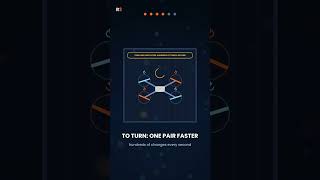
How a Drone Hovers
Four spinning propellers, tiny speed changes, and a sensor that checks hundreds of times a second keep a drone hovering.

Behavior Tree
A behavior tree organises a robot's choices as branches of small tasks. When one option fails, the tree simply tries the next, so a Plan B is built in.
🖐️ Hands and Touch

How a Robot Hand Holds an Egg Without Crushing It
Touch and force sensors tell the hand how hard it is squeezing. The controller stops tightening at just enough force.

Why Robotic and Prosthetic Hands Are So Hard to Build
A human hand packs many joints, strong tendons, fine touch and quick control into a tiny space. Matching that is very hard.

Why Surgical Robots Never Shake
A surgeon controls the robot from a console. The system filters out hand tremor and scales big hand motions into tiny precise ones.
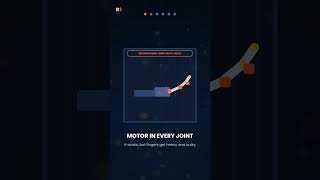
Tendon-Driven Robot Hands
Cables pull the fingers closed like tendons in your own hand, so the heavy motors can sit away from the fingers.
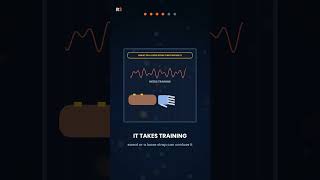
Prosthetic Hands
Tensing a muscle makes a tiny electrical signal. Sensors on the skin pick it up and the hand turns it into open or close.
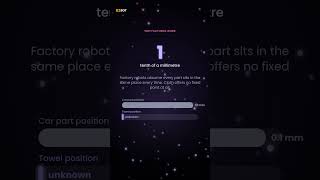
Why Robots Still Can't Fold Your Laundry
Cloth has no fixed shape. Every shirt lands differently, so the robot must see, plan and adapt at every fold.

End Effectors
The end effector is the tool at the arm’s tip. It must grip many shapes, gently and firmly, which is harder than moving the arm.

Slip Detection
Your fingers feel a slip before a glass falls. Robots can too, by sensing tiny vibrations and shear forces at the fingertip.

Soft Robotic Grippers
Hard metal fingers can crush an egg. Soft fingers hug it. Soft grippers bend around an object and share the force over a wide area.
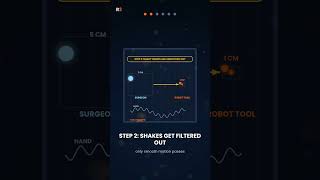
Robot Surgery Explained
The robot is not the surgeon. It is the steadiest pair of hands. Big hand movements become tiny precise ones inside the patient.

Robot Hand Degrees of Freedom
Your hand has about 27 moving parts. Copying all of them is very hard, and often not needed. It is a trade-off.
🏭 Robots at Work

How a Robot Vacuum Finds Its Charging Dock
The dock sends a signal the robot can detect. When the battery runs low, the robot heads toward that signal and lines up.

Why Robot Vacuums Always Miss the Corner
A round robot cannot fit into a square corner, and its sensors see less right at the wall. Side brushes only partly fix it.

How Warehouse Robots Avoid Crashing Into Each Other
A central planner gives each robot a route and reserves the path in time, like air traffic control, while on-board sensors handle surprises.

Why Robots Still Struggle to Climb Stairs
Stairs need 3D sensing, careful foot placement, balance and strong joints all at once. Wheels cannot do it, and legs are hard.
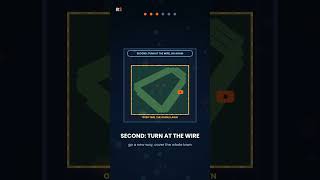
Robot Lawn Mowers
A buried wire marks the edge of the lawn. The mower follows one simple rule: reach the wire, turn, go a new way.

Robot Arms in Space
In orbit nothing falls, but heavy things still have a lot of momentum, so space arms move slowly and carefully.

Welding Robots
Parts never sit in exactly the same spot, so a welding robot senses the seam as it goes and corrects its path.

Wheels vs Legs
Wheels are fast and simple on flat ground. Legs are harder to build, but they step over obstacles and climb stairs.

How Mars Rovers Drive With a 20-Minute Delay
Radio takes many minutes to reach Mars, so the rover is given a plan and drives itself safely until the next message.

Why Sidewalk Delivery Robots Struggle With Kerbs
A small wheeled robot meets a kerb as a wall. It needs the right wheel size, a ramp, or a way to ask for help.

Why Industrial Robots Are Kept Behind Safety Cages
A fast, strong robot arm can hurt someone before they can react, so people and robots are kept apart or the robot slows down.

Why Robots Run Out of Battery So Quickly
Motors fighting gravity, computers and sensors all draw power. A robot that moves and thinks all day empties a small battery fast.

What Is a Cobot? The Robot Built to Work Beside You
Cobots slow down, sense contact and stop, so people can work next to them without a cage.

AGV vs AMR
One follows a fixed line. The other works out its own route around obstacles. That is the difference between an AGV and an AMR.
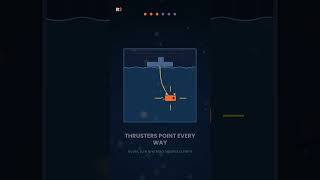
Underwater ROV
Humans cannot go that deep, so a robot goes for us on a cable. That is a remotely operated vehicle, or ROV.

Robot Exoskeleton
Sensors notice your intent and motors add a gentle push. An exoskeleton works with the body, not against it.

How a Delivery Robot Crosses the Road Safely
A sidewalk delivery robot crosses the road the careful way: it stops, tracks every moving thing around it, and goes only when the gap is safe.
Finished these? The free course path covers the same ground in longer videos, with quizzes and a certificate — start with How Robots Sense if you are not sure yet.