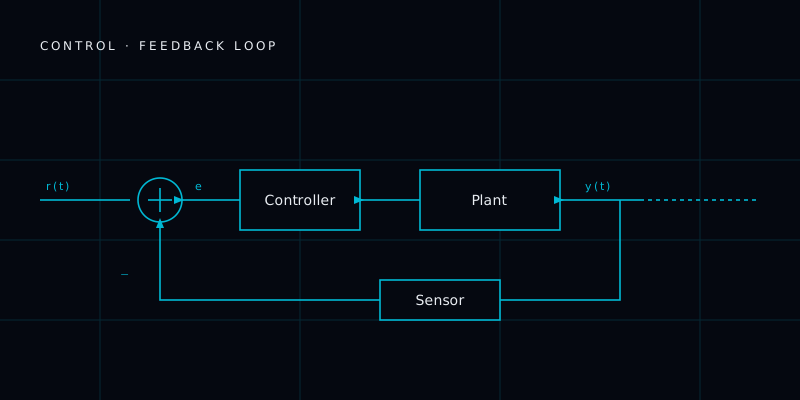
Admittance control lets a stiff, position-controlled robot behave as if it were soft — it senses contact force and moves in response, so a heavy industrial arm can push, polish, and yield gently to a human touch.
Admittance control makes a rigid robot feel springy. It measures how hard something pushes on it, then moves out of the way as if it had a soft spring inside — so it can press on surfaces or safely give way when a person leans on it.
🎯 Quick challenge
Admittance control takes force as input and outputs…
An industrial arm is built to be stiff — hold a position no matter what. But many jobs need the opposite: press a tool on a surface with steady force, insert a part that's slightly misaligned, or yield softly when a person bumps it. Admittance control gives a rigid robot that softness in software.
The core idea
Admittance control senses the force on the robot (via a force-torque sensor) and commands a motion in response, as if a virtual spring-and-damper sat between the robot and the world:
Push on it, and it moves away proportionally; the virtual stiffness and damping you choose decide how soft or firm it feels.
Admittance: force in, motion out
The robot stays position-controlled underneath; admittance just decides where to move based on how hard the world pushes.
Admittance vs impedance
The two are duals. Impedance control senses motion and outputs force — natural for a back-drivable, torque-controlled robot. Admittance control senses force and outputs motion — natural for a stiff, position-controlled robot (most industrial arms). Rule of thumb: stiff robot on soft environment → admittance; soft robot on stiff environment → impedance. Choosing wrong can make the system buzz and go unstable on contact.
Where you'll see it
Robotic polishing, deburring, and sanding (constant force on a curving surface); assembly with tight tolerances (let the part self-align); and collaborative robots with hand-guiding, where you grab the tool and lead it around and the arm flows with you.
Why it matters
Admittance control is how the world's millions of stiff position-controlled arms gained a sense of touch — turning rigid automation into machines that can safely and skillfully interact with surfaces and people.